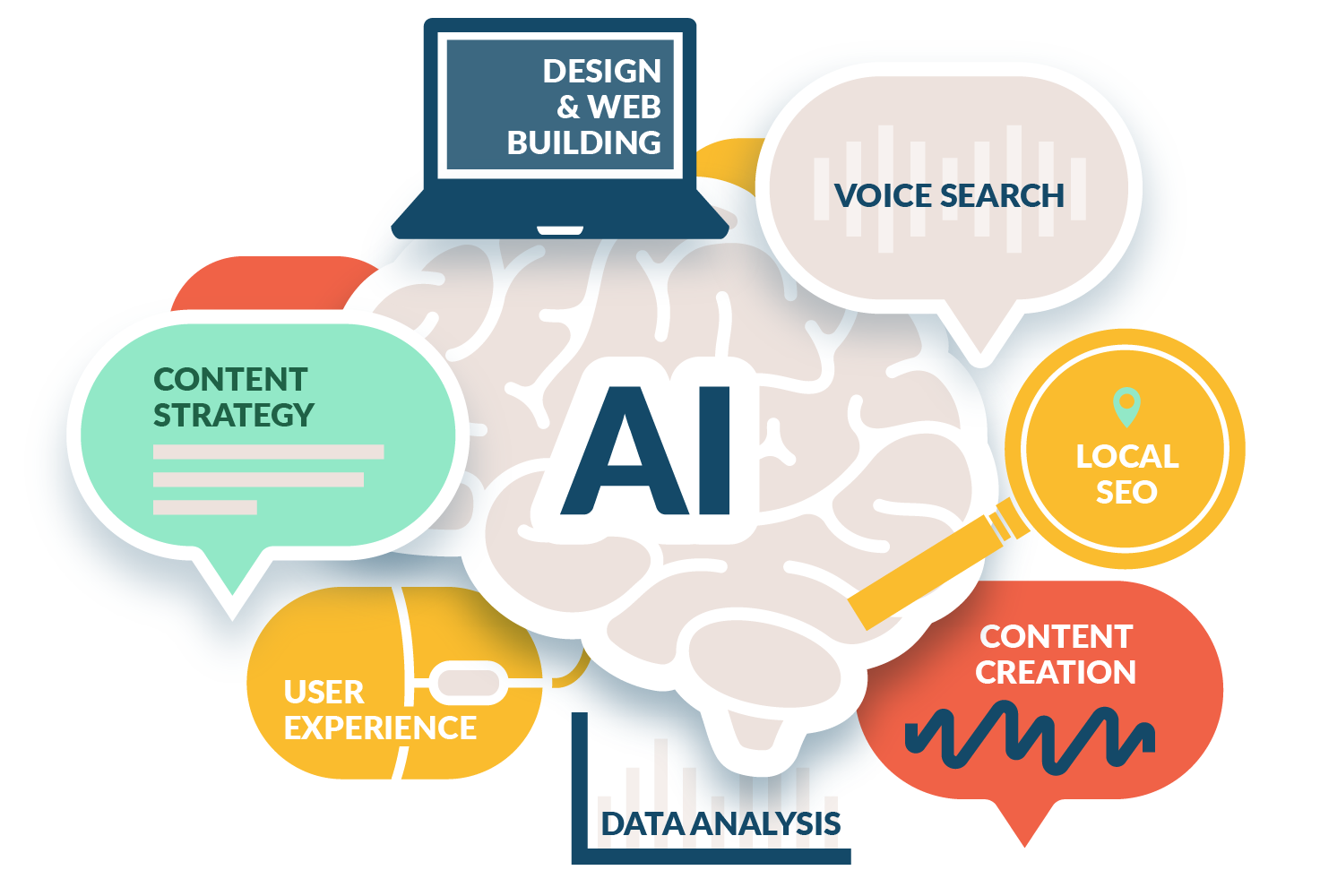

AI optimization is changing search as we know it. A staggering 60% of Google searches never leave the search engine results page (SERP). This has changed how people find your content.
The digital world has changed dramatically. AI Overviews now appear in 57% of Search Engine Results Pages, up from just 25% in August 2024. This quick change means we need new strategies for AI and SEO. Keywords and backlinks still count, but AI search engine optimization needs more. AI-powered SEO focuses less on metrics and more on creating real value.
AI agents will do more than suggest information – they’ll make decisions for people. Bing search results and ChatGPT Search responses match 73% of the time. Your content must be visible to AI systems now.
Your site and brand mentions matter substantially more for AI search than traditional SEO. Google still emphasizes that success comes from creating “unique, valuable content for people”.
This piece shows proven strategies to help your content succeed in this new AI-dominated search world. Let’s see how to make AI work for your SEO efforts rather than against them.
How AI Search Engines Actually Work
AI search engines work differently from traditional ones in the way they process and show information. You need to understand these differences to optimize for AI.
Training data vs live web data
AI search engines use two main sources of information. They rely on training data – huge datasets that build their knowledge base. This training data stops at a specific date, after which the AI knows nothing about new events, products, or information. The free version of ChatGPT stops around 2021, while Google keeps indexing new content constantly.
Live web data serves as the second source through retrieval-augmented generation (RAG) or live retrieval. The AI needs to look beyond its training data to find current information when you ask about recent events.
A Semrush study shows that 54% of ChatGPT responses come solely from pre-trained data, and just 46% use live lookups for current information. This split shapes AI search optimization strategies because outdated or missing training data can hurt visibility.
The AI chooses between internal knowledge or web lookup based on several factors:
- Query intent (static/factual vs. dynamic/time-sensitive)
- Brand or entity recognition
- Time indicators in the question
- The AI’s confidence in its pre-existing knowledge
Why no two AI answers are the same
Traditional search engines show stable rankings, but AI search results change all the time. This happens because AI systems work on probability rather than fixed rules.
A newer study of 10,000 commercial keywords showed that in Google’s AI Mode, only 9.2% of URLs cited stayed the same across three different sessions of identical queries on the same day. 29.4% of queries didn’t show even a single repeated domain across all three versions.
These changes get bigger over time – about 40-60% of domains cited in AI responses will completely change within a month, even for the same questions. The variation jumps to 70-90% after six months.
Website owners focusing on AI search engine optimization need constant monitoring. Random checks become useless in such a changing environment.
The role of Bing, Google, and Reddit
Major platforms power AI search results in vital ways. Most non-Google AI systems use Bing’s Web Search API for live retrieval, making Bing a key source for ChatGPT citations.
Google uses “query fan-out” in their AI Mode. They break down questions into subtopics and run multiple queries at once. This helps Google find specific information that matches questions better than traditional search.
Reddit stands out as a valuable source for AI systems. The discussion platform shows up often as an authority in AI results, with reddit.com making up 1.5% of all citations in Google’s AI Mode. Wikipedia (1.6%), YouTube (1.4%), and Indeed (1.8%) also show up regularly as trusted sources.
These platforms keep changing their relationships. Google got exclusive rights to Reddit’s content through a multi-million dollar deal. Now Google is the only search engine that can show recent Reddit results. Reddit launched its own AI-powered search feature, “Reddit Answers,” which only uses information from Reddit’s communities.
Your AI SEO strategy needs to consider these relationships to maximize visibility across the AI search ecosystem.
Optimize for Both Search and Answer Engines
AI search continues to grow, yet traditional SEO practices remain vital for digital visibility. The shift from keyword rankings to AI-powered answers needs a balanced approach that works for both systems.
Why traditional SEO still matters
Traditional ranking signals directly affect AI visibility, according to research. A newer study of 25,000 user searches revealed that websites ranked #1 on Google show up in AI search answers 25% of the time. The pattern stays consistent on major AI platforms – better Google rankings lead to higher AI citation chances.
“The higher you rank in Google’s top 10, the more likely you are to appear in AI search results across platforms,” says Tomasz Rudzki. His research proves this isn’t just theory but fact backed by data.
AI systems pick the best documents for each query by selecting content that ranks well in traditional search. Giving up SEO basics would be a big mistake, even as AI changes how people search.
How AI and SEO strategies overlap
AI and traditional optimization share many common elements. Quality, detailed content that answers user questions works well for both systems. Creating valuable resources that help visitors remains the foundation – exactly what Google has always supported.
SEO and Answer Engine Optimization (AEO) share these key elements:
- Content quality and expertise (E-E-A-T)
- Crawlability and proper rendering
- Structured data implementation
- Backlinks and brand mentions
- User-centric readability
- Multi-modal content formatting
SearchEngineLand states that “SEO is the fuel for AI chatbots”. AI platforms need content from trillions of webpages, and search engines help find and organize it.
Some key differences exist though. Traditional SEO focused on creating the “best page,” while AI search wants the “best answer”. Your content strategy needs to give precise, relevant responses to specific questions.
Make your site crawlable and fast
AI systems must access your content to cite it. Technical optimization matters more now because many AI crawlers lack Googlebot’s sophisticated capabilities.
JavaScript poses problems for most AI crawlers. Unlike Google’s crawler that processes dynamic content, AI bots often skip slow-loading pages or JavaScript elements. Server-side rendering becomes vital for AI visibility.
Your site’s crawlability improves when you:
- Put content in raw HTML source code, not JavaScript
- Use proper semantic HTML5 elements (header, nav, main, section)
- Create logical header hierarchy with proper H1, H2, and H3 structure
- Format data in HTML tables and use appropriate list tags
- Let legitimate AI crawlers like GPTBot for ChatGPT and CCBot for Common Crawl access through robots.txt
“If AI crawlers can’t access and understand it, it won’t cite it,” says a leading SEO expert. Fast server response times – under 300 milliseconds – matter because AI crawlers have stricter time limits than traditional search engines.
Structured data (schema markup) helps both systems. Traditional search engines understand your content better while AI gets clear, machine-readable signals needed for accurate parsing and summarization.
Successful websites will optimize for both traditional ranking signals and AI readability. They’ll create content that puts human users first while ensuring machines can process and cite it effectively.
Target Conversational and Long-Tail Queries
The change toward conversational search has transformed how users interact with search engines. Long-tail keywords are now the foundations of ai optimization. People communicate with search engines in a more natural, human way.
How people search differently with AI
Users no longer type short, fragmented phrases into search boxes. Conversational queries have surged in the past year. Queries with eight or more words have grown 7x since AI Overviews launched in May 2024. People don’t just type “best restaurants NYC” anymore. They ask complete questions like “What are the best family-friendly Italian restaurants in Manhattan with outdoor seating?”.
This development shows several distinct query types:
- Broad searches like “pens”
- Exact searches like “Apple iPhone 14 Pro”
- Feature-related searches like “men’s brown loafers”
- Compatibility searches like “appetizers for a gluten-free dinner”
- Concept searches like “something to be visible while running at night”
- Symptom-related searches like “alternative medicine to manage ringing in my ear”
Traditional keyword search engines work well with the first three categories. AI search optimization becomes vital for compatibility, concept, and symptom searches because these complex queries need understanding beyond keywords.
There’s another reason behind this change – voice search adoption. People now use devices like Alexa, Google Assistant, and Siri regularly and speak their queries naturally. Someone might type “coffee shop nearby,” but through voice search, they’ll say, “Hey Siri, where is the best coffee shop with WiFi near me?”.
Use real questions from your audience
Long-tail keywords mean more than just length – they show high intent. Someone who searches “how to optimize solar panel efficiency in cloudy climates” has a specific problem to solve. Success with these high-intent searches starts with collecting real questions.
Your existing resources can help. Your sales team hears customer questions every day – they provide valuable insights for ai seo strategy. Track the questions they hear most often. Do you have a database for these questions?
External platforms provide great insights too. Quora shows what people ask about in your industry. You can also type potential questions into Google and check the “searches related” section at the bottom for more ideas.
Question-based reports can show exactly what users ask about your brand or products.
These questions usually fall into three categories:- Research (e.g., “What are the most popular affordable prescription glasses options?”)
- Comparison (e.g., “How does Warby Parker’s customer service compare to Zenni Optical?”)
- Purchase (e.g., “What are the best sources for fashionable sunglasses under $100?”)
Finding content gaps helps you create resources that answer your audience’s questions directly.
Incorporate natural language in content
Natural language becomes vital for ai search engine optimization once you identify relevant questions. AI Overviews rewards human-like phrasing. Write as if you’re answering a question for a colleague – not talking to a robot.
Your headlines should be questions. “How can I use SEO in my content strategy?” works better than “SEO Content Strategy”. Give direct answers to these questions through clear language or bullet points.
Don’t stuff keywords. Use the complete long-tail query in your page title or H1, and answer the question clearly in the first paragraph. Support your content with examples, lists, or short paragraphs – AI Overviews prefers these formats.
Consider the user’s complete question. A search for “How do I treat an ACL tear without surgery?” needs content about causes and non-surgical treatment options with clear sections and subheadings.
Content that matches how people naturally speak and think lines up perfectly with ai seo optimization. This creates resources that serve both human readers and sophisticated AI systems that recommend your content.
Create Content That AI Wants to Cite
AI systems don’t randomly choose citations – they prefer content that shows authority through specifics rather than generalizations. Your content needs thoughtful structure and factual precision to make it citation-worthy.
Add data, examples, and specific recommendations
AI systems prefer content that has verifiable claims and factual statements over vague generalizations. Content with specific, current information stands a better chance of appearing in AI-generated responses.
These steps will boost your AI optimization:
- Recent statistics with source citations
- Studies or expert insights where relevant
- Clear authorship and credentials for E-E-A-T signals
- Timestamps that show fresh updates
Studies show AI-generated search results deliver more detailed, contextual answers than traditional search. AI overviews get more clicks than classic Featured Snippets, which suggests users find these complete results more valuable.
AI systems break content into “chunks” instead of indexing whole pages. Each section should work independently. This passage-level retrieval means your paragraphs need semantic tightness and self-containment to maximize citation potential.
Use headings, lists, and tables for clarity
AI search systems scan pages like speed readers and look for structural cues to understand your content quickly. Strategic information organization becomes crucial for AI search engine optimization.
Your heading hierarchy should follow a logical pattern – one clear H1 with H2s and H3s that outline your topic coherently. These work as signposts for AI to understand how concepts connect.
Tables and lists make your AI SEO strategy more effective. AI systems handle structured data better than plain text, which makes tables perfect for statistics, comparisons, and data points. Bullet points and numbered lists help AI extract key takeaways for summaries easily.
MonsterInsights research shows users click rich results 58% of the time compared to 41% for non-rich results, which proves structured data’s power to increase visibility.
Write for both humans and machines
Success depends on balancing human engagement with machine readability. Google emphasizes creating “unique, valuable content for people”.
This balance needs:
- Clear subject-predicate-object sentences (e.g., “LeBron James scored 30 points”)
- Key terms and entities defined early
- Related words and entities kept close together
- Schema markup with JSON-LD for structured data
AI citation patterns change often. A newer study shows 40-60% of domains cited in AI responses change completely within a month, even for identical questions. After six months, this variation reaches 70-90%.
Your content needs factual, well-laid-out information to stay visible despite these changes. Good organization and evidence-based information turns your content into a trusted resource that humans and AI systems want to reference.
Develop Visual and Interactive Assets
Visual content has become the life-blood of successful ai optimization. AI systems can now analyze images and videos, so your digital presence needs to go beyond text to stand out in search results.
Why YouTube and visuals dominate AI results
YouTube stands as a citation powerhouse in AI-generated answers. Research shows it ranks as the third most-cited domain in AI responses. Google Lens processes nearly 20 billion visual searches monthly, making this dominance quite natural.
Videos appeal to AI systems for two main reasons. They pack multiple data points into a single demonstration – something text can’t match. AI technology can now pinpoint specific segments that directly answer user questions.
These videos perform best:
- How-to tutorials that provide educational value
- Visual demonstrations showing products or processes in action
- Comparison videos that help with decision-making
AI-powered search now interprets and translates text into images. A business that implemented reliable visual optimization saw its image-rich results jump by 72% and overall impressions rise by 5%.
Create tools, charts, and calculators
Interactive elements are a great way to get value for ai search optimization. Calculator tools have proven to be powerful engagement drivers that boost conversion rates up to 40%, according to ConversionXL data.
These interactive assets bring three key benefits to your ai seo strategy:
Users get instant answers. Visitors can self-filter based on budget. The core team’s workload drops through 24/7 automated estimates.
A manufacturer’s quote requests soared by 65% after adding an AI-generated calculator to their website. Creating interactive elements used to need deep programming knowledge. Now, platforms like Outgrow let you build calculators without coding skills.
Repurpose content across platforms
Content repurposing amplifies your visibility in the AI search ecosystem. Each content piece can exist in multiple formats and reach different audiences.
Long-form YouTube videos can become complete blog posts. AI tools identify compelling moments from your content – insightful quotes, surprising statistics, or powerful predictions – and reshape them for different platforms.
Effective repurposing works like this:
Podcasts turn into newsletters and social posts Blog content transforms into social media updates using AI tools Written content becomes visual summaries of key points
This approach matters more as AI search becomes increasingly multimodal. Users snap photos, ask questions about them, and get complete responses through AI power. High-quality visuals alongside your text content keep you visible whatever the search format.
AI now learns directly from images, making visual asset optimization essential. Successful websites will offer complete, multiformat content that works equally well for human users and AI systems.
Get Listed on Trusted Third-Party Sites
Your brand’s mentions across the web substantially impact AI search visibility. Your strategic presence on trusted third-party platforms is vital for ai search optimization, beyond just optimizing your own site.
Claim profiles on review and directory sites
AI systems rely heavily on industry-specific review sites as trusted information sources. AI engines draw extensively from review platforms when comparing products, unlike traditional SEO where backlinks ruled. Reviews that explain specific features and use cases carry much more weight than basic ratings.
Each industry needs focus on specific platforms:
- B2B SaaS: G2, Capterra, and GetApp
- Ecommerce: Amazon reviews
- Local/service businesses: Yelp and Google Reviews
Research reveals AI systems look beyond backlinks to understand authority. They analyze every brand mention across the web, including those without clickable links. This changes the way you should build your online presence.
A detailed review strategy needs four key elements: right timing after product use, specific templates that encourage feature discussion, rewards for detailed feedback, and vendors who respond to every review.
Pitch journalists and bloggers
Hundreds of AI responses draw from comparison articles and “best of” lists. Validations from publications like TechRadar carry way beyond the reach and influence of your own content.
These steps help secure valuable mentions:
- Build a dedicated press kit page with specs, pricing, and high-res images
- Choose publications based on AI citation patterns
- Time your pitches months before annual “best of” list updates
- Look beyond obvious categories to multiply potential mentions
Subject lines determine pitch success. AI’s growing role in evaluating pitches means using the right keywords could land you a story. On top of that, journalists search their inboxes like engines to find expert sources, making keyword optimization vital.
Use internal data to earn mentions
Data sharing works best with a strategic approach to citations. Team up with industry writers, creators, and newsletters by suggesting use cases where your tool fits naturally – skip the generic PR material.
Citation monitoring reveals which outlets influence AI results. Target publications that mention your competitors. This blends SEO and PR by making your brand visible where AI systems already look.
Local and mid-tier publications add value. Coverage across credible sources of all sizes builds authority that AI recognizes. AI search aims to describe you accurately rather than market you. Authentic reviews naturally lead to more responses.
Earned media’s relationship with AI visibility has transformed completely. Media coverage shapes how AI influences public understanding, not just awareness. Your organization might stay invisible without citations in credible sources.
Manage and Leverage Online Reviews
Online reviews serve as vital ranking signals for ai optimization. Your business’s reputation and AI systems’ recommendations depend heavily on customer feedback.
Encourage reviews on key platforms
Simply asking customers remains the most powerful review strategy. Automated email or SMS review requests right after purchase can increase volume by 2-3x compared to passive collection.
Each industry has its preferred platforms:- B2B software companies: G2, Capterra, GetApp
- E-commerce businesses: Amazon reviews
- Local services: Google Maps, Yelp, Apple Maps
Customers should receive specific questions instead of requests for general praise. Questions like “What service did you book?” and “What stood out?” help generate detailed responses. AI systems thrive on these context-rich answers.
Your website should feature user-friendly review forms that are easy to find. Small incentives like future purchase discounts can boost participation rates while staying within platform guidelines.
Respond to feedback and build trust
Businesses that provide swift, thoughtful responses gain a competitive edge in ai search optimization. Studies show 82% of consumers favor businesses that engage with reviews.
Professional and empathetic responses work best for negative feedback. Show your steadfast dedication to problem-solving. This approach rebuilds customer trust and shows AI systems your active involvement.
Automation tools help handle responses efficiently, but generic, robotic-sounding replies should be avoided. The key lies in finding the sweet spot between efficiency and authenticity. AI-crafted responses need human review to maintain your brand voice.
Use reviews as content and citations
First-party reviews on your website enhance consumer trust and search visibility.
Schema markup enables these reviews to:- Become eligible for rich snippets in traditional search
- Feed signals into Google’s Knowledge Graph
- Serve as training material for AI summaries
Companies using consistent multi-channel review strategies demonstrate stronger reputation signals in volume, recency, and engagement. These signals determine which businesses appear in AI-generated results.
Reviews should spread across your marketing channels. Showcase positive feedback on your homepage, social media, and landing pages. They also make excellent source material for case studies and testimonial pages that showcase real-life value.
Note that reviews in AI search do more than drive conversions – they act as discovery signals that determine result inclusion. This radical alteration transforms review management from a customer service task into a crucial part of your ai seo strategy.
Track AI Rankings and Adapt Fast
Your AI search visibility needs continuous monitoring. AI citations change more frequently than traditional rankings. Research shows 40-60% of domains cited completely change within a month for similar questions.
Use tools like OmniSEO and manual checks
You can’t ignore tracking AI visibility anymore.
New platforms help you monitor your brand’s presence in AI answer engines:- Rankability’s AI Analyzer tests branded prompts across answer engines and shows how your pages compare to competitors
- Peec AI watches your appearances on ChatGPT, Perplexity, and Google AI Overviews with share-of-voice analysis
- LLMrefs provides live keyword crawling and weekly trend reports to find quick wins
These tools solve your biggest problem: understanding how AI systems discuss your brand. You’ll know which prompts trigger mentions and if you’re cited as a source.
Monitor which pages get cited
Watch the specific URLs that AI systems cite. This reveals what content patterns work for ai optimization. Good monitoring shows:
The domains AI models trust most in your field. Your citations’ format – links versus plain mentions. The competitors that show up among your brand’s mentions.
One expert says, “The brands that review the data and act fast – not the ones with the priciest dashboard – will own tomorrow’s AI search results”.
Refresh and expand content based on trends
AI results change faster than ever, so your content strategy must adapt quickly. Look at pages getting citations and understand why. Maybe it’s detailed data, clear structure, or recent updates.
This information helps improve underperforming pages. Add missing data points, make content clearer, or update old statistics.
Look for topics where AI systems cite competitors but miss your content. Turn your monitoring into action by filling these gaps instead of just running reports and guessing.
AI search changes daily. Yesterday’s winning tactics might not work tomorrow. Regular monitoring and quick adaptation help you remain competitive.
Conclusion
AI search has changed how people find your content online completely. This rise needs you to work on two fronts – keep up with regular SEO while adapting to what AI wants. Your content should work well for both search engines and answer engines now.
You need to focus on a few important things to do well in this new space. Your site must be technically strong and load fast. You should answer real questions from your audience in natural language. The content needs a logical structure with headings, lists, and tables that people and machines can understand easily.
Visual content plays a big role too. Videos, interactive calculators, and graphics that people can share make your content stand out in AI results and help users more. Your presence on trusted external sites affects how AI views your authority by a lot.
Reviews do more than just help conversions now – they’re crucial ranking signals. Managing customer feedback on relevant platforms makes your reputation stronger. This also helps you show up more in AI-generated answers.
AI search changes faster than traditional rankings, so you need to stay alert. AI might change how it shows your content within weeks. You should track which pages AI mentions, find what works, and adjust your strategy based on what you learn.
This new search era needs real value above everything else. Don’t look for quick fixes. Create helpful resources that deserve to be mentioned. Search engines and AI will notice and reward content that helps users solve their problems.
AI and SEO will keep changing faster. In spite of that, websites that accept these changes will do better. The key is to work with both technologies while putting user needs first.
Key Takeaways
Master the evolving search landscape where AI optimization and traditional SEO must work together to maximize your content’s visibility across both search engines and answer engines.
- Maintain technical SEO fundamentals while adding AI-specific optimizations – Sites ranking #1 on Google appear in AI answers 25% of the time, proving traditional ranking factors still drive AI visibility.
- Target conversational, long-tail queries using natural language – Queries with 8+ words have grown 7x since AI Overviews launched, requiring content that mirrors how people naturally speak.
- Structure content for machine readability with headings, lists, and tables – AI systems scan pages like speed readers, prioritizing well-organized content with clear hierarchies and data formatting.
- Build authority through external mentions and reviews across trusted platforms – AI systems heavily weight brand mentions from credible third-party sites, making review management and media coverage critical for visibility.
- Monitor AI citations continuously and adapt quickly – 40-60% of domains cited in AI responses change monthly, requiring constant tracking and rapid content updates to maintain visibility.
The key to success lies in creating genuinely valuable content that serves human users first while ensuring AI systems can easily access, understand, and cite your expertise. This dual approach positions your content for sustained visibility as search technology continues evolving.
FAQs
Q1. How does AI search differ from traditional search engines? AI search engines use a combination of pre-trained data and live web retrieval to generate answers, while traditional search engines primarily display links. AI search results are more dynamic and can provide direct answers to complex queries.
Q2. What are some key strategies for optimizing content for AI search? Key strategies include using conversational language, structuring content with clear headings and lists, incorporating specific data and examples, and ensuring your site is technically optimized for AI crawlers.
Q3. How important are reviews and third-party mentions for AI search visibility? Reviews and third-party mentions are crucial for AI search visibility. AI systems heavily weigh external references when evaluating a brand’s authority and relevance, making review management and media coverage essential components of AI optimization.
Q4. What role do visual and interactive elements play in AI search optimization? Visual and interactive elements like videos, images, and calculators are increasingly important for AI search. These assets can improve engagement, provide richer information, and increase the likelihood of your content being cited in AI-generated responses.
Q5. How often should I monitor and update my content for AI search? Regular monitoring and updating are critical due to the volatility of AI search results. Studies show that 40-60% of domains cited in AI responses can change within a month, necessitating frequent content refreshes and expansion based on emerging trends.