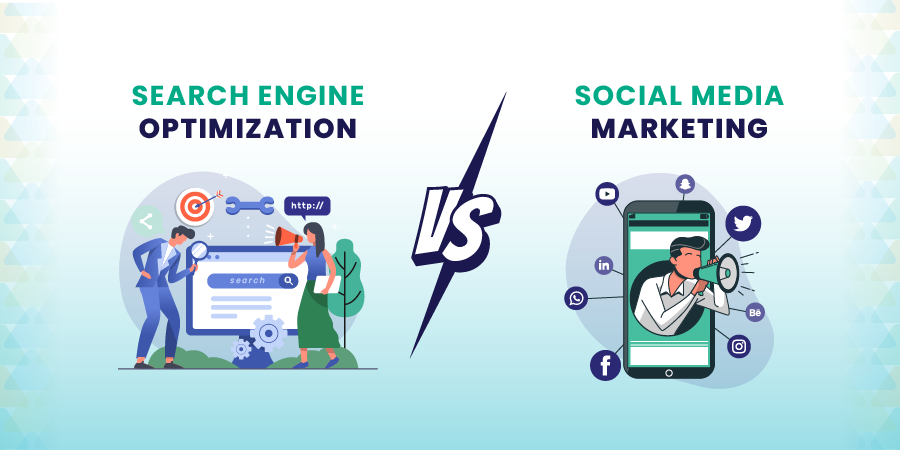

Did you know that 93% of online experiences begin with search engines? Many businesses still find it challenging to allocate their marketing budget between SEO and social media.
The numbers tell an interesting story. About 41% of US consumers prefer to buy directly from brand websites, while only 17% choose social media platforms for their purchases. This difference shows a significant gap in how each channel generates sales. Social media marketing can boost visibility quickly, though organic reach remains limited – your posts typically reach just 2-6% of followers. SEO, on the other hand, creates lasting traffic by placing your content at the top of search results for relevant keywords.
Quality content and strategic keyword targeting help SEO deliver consistent results, though it takes time. Social media shines at building brand awareness and quickly connecting with large audiences.
The real question is: which method drives more sales for your business? Rather than choosing between the two, combining search engine optimization with social media marketing allows you to create content that both ranks well and connects with potential customers across platforms. This piece will explain how each channel affects your revenue and reveal the smartest ways to use both for maximizing sales in 2025.
Understanding Buyer Intent in SEO vs Social Media
The main difference between SEO and social media shows up in how people use these platforms. Buyer intent – the reason behind user actions – explains why certain marketing channels convert better than others.
Understanding Buyer Intent in SEO vs Social Media
Search Queries vs Social Browsing Behavior
People behave quite differently on search engines compared to social media platforms. Search engine users look for specific solutions to their problems – they want to find you. Social media users browse content casually and might see business posts while they check their friends’ photos or watch videos.
This difference creates a clear advantage for search traffic. Research shows 93% of all web traffic flows through search engines across every demographic. Search engines direct users to business websites, while social platforms want users to stay within their ecosystem.
The digital world reflects this basic difference: search engines connect users with exactly what they need, which makes them great tools to reach buyers who are ready to purchase. YouTube works like a regular search engine and helps brands build authority through helpful content.
Commercial Intent: Keywords vs Interests
Search engines work well for sales because of commercial intent – the chance that someone using a specific keyword will become a customer.
Commercial keywords show how ready a buyer is to purchase.
These keywords fit into four groups:
- Buy Now Keywords: Used right before purchase (words like “buy,” “coupon,” “discount”)
- Product Keywords: About specific items (“review,” “best,” “top 10”)
- Informational Keywords: Learning focused (“how to,” “ways to”)
- Tire Kicker Keywords: Unlikely to buy (“free,” “torrent,” “download”)
Social media targets users based on what they like and who they are rather than their buying intent. The algorithms show content users might engage with. Search engines focus on giving relevant answers to specific questions.
How Buyer Experience Differs Across Channels
Buyers move through awareness, interest, consideration, and decision stages. Each channel works best at different points in this process.
Marketing expert Avinash Kaushik’s See-Think-Do framework explains this well: social media excels in the “See” stage (awareness), while SEO works well across all three stages – See, Think, and Do. This makes search valuable for reaching users who are ready to buy.
Social media helps people find new things. To name just one example, 44% of Gen Z finds new brands on social media daily. Most buyers switch between platforms during their search. A 25-year-old apartment decorator might start on Pinterest, use Google to learn terms, then check Instagram hashtags to find local art before buying.
The biggest gap shows up in conversion rates. Social media creates engagement but rarely leads to direct sales. SEO connects businesses with customers who are actively looking for their products or services.
Understanding these differences in buyer intent helps you use your marketing resources better to reach potential customers at every stage of their experience.
Sales Funnel Fit: See-Think-Do Framework Explained
A clear framework helps you understand how each digital marketing channel fits into your customer’s experience to maximize sales. The See-Think-Do framework, developed by Google’s Digital Marketing Evangelist Avinash Kaushik, provides a practical way to line up your marketing efforts with buyer behavior.
SEO Across See, Think, and Do Stages
The See-Think-Do framework segments the customer’s experience into distinct stages that reflect natural purchase decisions. SEO demonstrates remarkable versatility throughout these stages:
The See stage leverages SEO to build brand awareness through informational content. Your widest qualified audience exists here, though they might not be ready to buy. Blog posts, guides, and educational resources optimized for broad keywords help introduce your brand to potential customers who search related information.
The Think stage uses SEO to reach prospects who actively look for solutions. Customers research options at this point without making purchase decisions. Long-tail keywords become vital as they target users with specific product or service questions. Case studies, comparison guides, and product reviews help shape decisions by showcasing your offering as the best solution.
The Do stage lets SEO drive conversions through high-intent, transactional searches. Customers know exactly what they want and stand ready to purchase. Product pages, checkout processes, and transactional keywords like “buy,” “order,” and “discount” help capture these ready-to-convert searchers.
Social Media’s Strength in See and Think
Social media marketing truly shines during early customer experience stages:
See stage audiences respond well to social media’s brand awareness capabilities. Eye-catching visuals, entertaining content, and targeted ads help introduce your brand to potential customers. Social platforms excel at reaching broad audiences based on demographics and interests before customers recognize their needs.
Think stage activities on social media promote consideration through interactive content and relationship building. Polls, quizzes, and questions encourage followers to interact with your brand and transform passive viewers into active participants. Social listening proves vital as it helps you understand your audience’s interests.
Where Each Channel Converts Best
Each channel shows distinct patterns in conversion effectiveness:
SEO produces higher-quality leads at the bottom of the funnel. Organic search traffic comes from people actively seeking solutions and generates better conversion rates for direct purchases. Users finding your site through SEO typically stand closer to making purchase decisions.
Social media excels at relationship building and indirect conversions. These platforms create brand advocates who purchase and influence others. Businesses wanting quick brand recognition can use Instagram and TikTok to create viral trends and increase visibility faster.
A strategic combination of both channels works best. Social media can increase the reach of SEO content and create powerful results – social channels build awareness and involvement, then drive users to search for your brand, where your SEO efforts capture them with high-converting content.
Traffic Quality and Conversion Potential
Numbers tell a clear story when we match SEO against social media marketing. Raw metrics show striking differences in how these channels bring traffic and conversions that affect your bottom line.
Organic Search Click-Through Rates vs Social Engagement
Click-through rates (CTR) reveal the conversion potential of each channel. Data shows organic search performs better than paid advertising – the average Google Ads CTR sits at 1.91% on search networks and falls to 0.35% on display networks.
Organic search results show varying CTRs by position:
- Top organic result: 20-30%
- Positions 2-3: 10-15%
- Lower positions: Often below 5%
Social media platforms show different patterns. Facebook Ads have a median CTR of 1.6% across industries. eCommerce can do better with rates above 2%. LinkedIn Ads lag behind with a median CTR of 0.68%.
These differences come from how users behave. Search users look for specific solutions, while social media users browse content without planning to buy.
Bounce Rates and Time on Site Comparison
Visitor behavior shows the quality of traffic. Studies prove that search visitors explore more pages and stay longer.
A complete study shows organic search visitors have an average bounce rate of 55.6%, which is lower than social media visitors at 67.6%. Search visitors show this difference because they type specific questions to find answers.
Time on site numbers tell a similar story. Search traffic brings higher pages per visit and longer visits. One expert puts it well: “If you really want an answer, if you took the time to search for it, if you typed it on a keyboard, you’re more likely to spend more time and visit more pages”.
Mobile-friendly sites see lower bounce rates. This matters because 57% of online traffic comes from mobile devices.
Lead Quality: Inbound SEO vs Outbound Social
The quality of leads from each channel matters most for sales. SEO brings inbound leads that show more interest in buying than social media leads.
Inbound SEO leads stand out with:
- Better qualified users who find you on their own
- Clear buying intent from commercial keyword searches
- Higher conversion rates from solution-seeking visitors
Social media leads work more like outbound marketing. Social platforms help target specific demographics and interests, but rarely catch users ready to buy.
Yes, this explains why organic search content gives better ROI over time. SEO builds lasting foundations that keep bringing high-intent visitors every month, unlike paid social campaigns that stop working when you stop paying.
Smart marketers use both channels to get the best results. They use SEO to catch ready buyers and social media to build brand awareness and spread content. This approach covers all customer journey stages and helps convert better across channels.
Cost and ROI: Which Channel Delivers More Value?
Marketing budgets need a clear understanding of each channel’s actual returns. Let’s take a closer look at what you really get back from SEO versus social media marketing.
SEO Investment: Time vs Long-Term Gains
SEO rewards patience and builds financial momentum gradually. Your original investment covers:
- Content creation and optimization
- Technical website improvements
- Link-building efforts
The results are worth the wait. SEO becomes more affordable as time passes. Companies earn $2.75 for every $1 they spend on SEO. Some studies show returns as high as 22:1 (that’s 2,200% ROI).
SEO value compounds naturally. Unlike paid channels that stop working when you stop spending, SEO keeps bringing visitors year after year. Technical SEO gives you an ROI of 117%, which beats many other marketing strategies.
Your website gains more authority and you’ll see:
- Less dependence on paid ads
- Lower acquisition costs
- Better conversion rates from targeted traffic
Social Media Ad Spend: Fast Results, High Cost
Social media delivers quick results but costs more. Platform CPM (cost per thousand impressions) rates in 2025 show big differences:
- Meta (Facebook & Instagram): $8.15
- TikTok: $2.97
- YouTube: $2.16
- Snapchat: $6.43
- Pinterest: $6.03
These prices change based on seasons, competition, and targeting accuracy. Black Friday week hits the hardest – Facebook CPMs jump to $13.42.
Social media shines at quick engagement. But this visibility costs you constantly – results disappear almost immediately when you stop running campaigns. Costs also spike during holidays when advertisers fight for limited ad space.
ROI Standards for SEO vs Social Media
Direct comparisons show clear differences. A $100,000 yearly marketing budget through SEO could bring $51,724 in revenue compared to $23,275 from paid advertising – twice the return.
Social media shows good numbers too. Businesses get back $5.20 for every dollar they spend on social media ads. YouTube leads the pack among social platforms, with Facebook and Instagram right behind.
Notwithstanding that, SEO wins on sustainability. Content marketing costs 62% less than traditional outbound methods and gets you three times more leads. Organic search brings 53% of website traffic, which creates lasting growth without constant spending.
The bottom line? Both channels can make you money, but they work differently over time. Social media wins quick visibility and brand awareness. SEO builds a lasting asset that keeps paying off year after year.
Smart marketers use both approaches based on their business goals, available resources, and sales cycle length.
Platform-Specific Sales Impact
Different platforms provide unique advantages to boost sales. Let’s get into which digital channels work best for specific business goals.
Google and YouTube for High-Intent Buyers
Google still rules high-intent traffic. Its worldwide search engine market share stands at 81.95% as of January 2024. The platform’s strength lies in capturing users who actively seek solutions. Users convert faster because they have already identified their needs and search for answers.
YouTube serves as both a social platform and search engine that attracts users with specific questions. Modern consumers rely on YouTube for product research before buying. The platform now allows 10-minute videos to compete with traditional content creators and grab users with longer attention spans.
Search Engine Marketing (SEM) performs better than social channels for sales-ready prospects by offering:
- Better quality leads from active solution seekers
- Quick access to purchase-ready customers
- More credibility through organic search results versus ads
Facebook and Instagram for Brand Discovery
Social platforms help introduce products to customers who haven’t started searching yet. UK consumers find brands through social media 38% of the time – more than search engines (37%) and TV ads (35%).
Instagram has evolved into a sales powerhouse with 54% of users buying products they see on the platform.
Users take several actions after spotting products on Instagram:
- 79% search for more information
- 65% visit the brand’s website
- 46% make purchases online or offline
Facebook proves effective for direct purchases as 39% of consumers use it when ready to buy. Its massive reach extends to 3.065 billion monthly active users.
LinkedIn for B2B Lead Generation
LinkedIn dominates business-focused sales. The platform generates leads 277% more effectively than Facebook and Twitter. This makes it a vital part of B2B marketing strategies.
LinkedIn’s success comes from its professional focus – 80% of B2B leads originate from LinkedIn compared to all other social platforms combined. The platform connects with decision-makers directly. Four out of five LinkedIn users influence business decisions.
LinkedIn’s precise targeting helps businesses reach specific industries, job roles, and companies. This results in higher conversion rates. LinkedIn’s Lead Gen Forms convert at 13%, which significantly beats the industry’s average landing page conversion rate of 2.35%.
Combining SEO and Social for Maximum Sales
Smart marketers know that combining SEO and social media efforts creates more value than choosing just one strategy. Together, these channels produce better results than they would separately.
Using Social to Boost SEO Content
Social media works as a powerful way to spread your SEO content. Your blog posts, articles, and landing pages reach more people when you share them across platforms. This broader exposure brings more visitors to your website.
Your content builds momentum through consistent sharing on different platforms. When a piece gets traction on Facebook or LinkedIn, search engines notice that people find your content valuable. This creates a positive cycle – more social visibility brings more organic search traffic.
The best approach breaks down longer SEO content into individual social posts. You can turn statistics from blog posts into eye-catching infographics or pull out quotes for quick updates. This method helps you get the most from your original SEO work.
How Social Signals Support SEO Rankings
Google might not use social signals as direct ranking factors, but these engagement metrics still affect SEO performance in other ways. Bing takes likes and shares into account in its algorithm, which makes social signals valuable for ranking on Microsoft’s search engine.
Social signals help SEO in several important ways:
- More content visibility creates more organic backlinks – crucial for ranking
- Active social profiles build stronger brand awareness
- Higher social engagement brings traffic and improves metrics like time on site
Local businesses get extra SEO benefits from social signals. When users check in, mention, or review businesses on Facebook, it helps them show up better in local search results.
Cross-Channel Retargeting Strategies
Cross-channel remarketing stands out as one of the best ways to blend SEO and social media for sales. This method helps you connect with users on multiple platforms after they first interact with your brand.
Your follow-up ads can reach people on Google Ads, Meta platforms, LinkedIn, and display networks. This detailed approach keeps your brand visible wherever potential customers spend their time online.
The numbers tell the story – customers who use multiple channels spend three to four times more than those who use just one. A unified system that reconnects with prospects at different touchpoints helps turn missed opportunities into loyal customers.
Comparison Table
| Aspect | SEO | Social Media Marketing |
| Traffic Source | Search engines initiate 93% of online experiences | Followers see only 2-6% of organic content |
| Purchase Preference | Customers prefer websites 41% of the time | Social media platforms account for 17% of purchases |
| Traffic Quality | – 55.6% bounce rate – Users view more pages – Users stay longer | – 67.6% bounce rate – Users explore fewer pages – Users leave quickly |
| Click-Through Rates | – Top spot yields 20-30% – Second and third positions get 10-15% | – Facebook achieves 1.6% – LinkedIn reaches 0.68% |
| ROI | – Each dollar spent returns $2.75 – ROI can reach 2,200% – Technical SEO delivers 117% ROI | Advertising returns $5.20 per dollar invested |
| Buyer Intent | Users actively seek solutions | Users casually browse content |
| Cost Structure | – Initial investment is higher – Results continue after investment | – Ads need constant funding – Results depend on continuous spending |
| See-Think-Do Framework | Delivers results at every stage | Excels in awareness and consideration phases |
| Lead Generation | – Leads show higher quality – Buyers show stronger intent – Conversion rates excel | – Brand awareness improves – Demographics target well – Direct conversions lag |
| Long-term Value | Creates sustainable traffic and authority | Success depends on ongoing investment |
Conclusion
The competition between SEO and social media marketing depends on your business goals and timeline. SEO clearly wins at capturing high-intent buyers who actively seek solutions. Social media shines when it comes to brand discovery and awareness. Both approaches provide great value when done right.
Numbers tell an interesting story about SEO’s effectiveness. Search visitors spend more time on websites, have lower bounce rates, and convert better than social traffic. On top of that, SEO keeps delivering results long after your original investment. This creates a snowball effect that grows over time.
Social media is excellent at reaching new audiences quickly. Facebook and Instagram work really well to showcase products to people who aren’t searching for them yet. These platforms create awareness that later drives users to search engines with buying intent.
The question of which channel drives more sales has no simple answer. SEO typically brings in more direct sales from customers ready to buy. Social media shapes early buying decisions and builds brand recognition that turns into sales through other channels.
Smart marketers don’t pick sides. They use both channels based on the See-Think-Do framework. Social media builds awareness and interest during the See and Think phases. SEO captures users at all stages and really shines at the vital Do stage where people make purchases.
Using both channels together produces better results than either could achieve alone. When people share SEO content on social media, it reaches more people and indirectly helps search rankings. Retargeting across platforms turns initial interest into sales by keeping your brand visible everywhere.
The bottom line? Both channels belong in your marketing strategy. Your specific mix depends on your sales cycle, resources, and goals. SEO wins the long game with lasting, high-intent traffic. Social media wins the quick race with fast visibility and brand building. Together, they create a system that maximizes sales potential throughout the customer’s buying process.
Key Takeaways
Here are the essential insights from comparing SEO and social media marketing for driving sales in 2025:
- SEO captures high-intent buyers: 93% of online experiences start with search engines, delivering visitors with 55.6% bounce rates versus 67.6% for social media traffic.
- Social media excels at brand discovery: 38% of consumers discover brands through social platforms, making it ideal for awareness but less effective for direct sales.
- ROI differs by timeline: SEO generates $2.75 per $1 spent with compounding long-term value, while social delivers $5.20 per $1 but requires continuous investment.
- Buyer intent drives conversion quality: Search visitors actively seek solutions with commercial intent, while social users passively browse without purchase motivation.
- Combined strategies maximize results: Using social to amplify SEO content and cross-channel retargeting creates synergy that outperforms either approach alone.
The most successful businesses don’t choose between SEO and social media – they strategically combine both channels. SEO dominates the bottom of the sales funnel by capturing ready-to-buy customers, while social media builds the top-funnel awareness that eventually drives users to search with purchase intent.
FAQs
Q1. Is SEO still effective for driving sales in 2025? Yes, SEO remains effective for driving sales in 2025, especially for capturing high-intent buyers actively seeking solutions. While it requires patience, SEO delivers qualified leads with stronger purchase intent and continues generating results long after the initial investment.
Q2. How does social media marketing compare to SEO for sales? Social media excels at brand discovery and awareness, particularly in the early stages of the customer journey. It’s effective for quickly reaching new audiences but typically generates lower direct conversion rates compared to SEO. Social media is ideal for introducing products to customers who aren’t yet searching for them.
Q3. What are the key differences in traffic quality between SEO and social media? SEO traffic generally has higher quality, with lower bounce rates (55.6% vs 67.6% for social media), longer time on site, and more pages visited per session. This is because search visitors have stronger intent, actively seeking solutions to their problems.
Q4. How do ROI and costs compare between SEO and social media marketing? SEO typically generates $2.75 for every $1 spent, with potential ROI up to 2,200%. It requires a higher upfront investment but delivers long-term results. Social media advertising averages $5.20 return per $1 spent but requires ongoing costs to maintain results.
Q5. Should businesses focus on SEO or social media marketing in 2025? The most effective approach combines both SEO and social media marketing strategically. SEO is crucial for capturing bottom-funnel, ready-to-buy customers, while social media builds top-funnel awareness. Using social media to amplify SEO content and implementing cross-channel retargeting creates synergy that outperforms either approach alone.